
Brown County Property Value Types
Three numbers anchor a Brown County parcel result. Land is one. Improvements are another. The total assessed value is the third, and all of them are tax-roll fields. Wisconsin's Department of Revenue rounds this out with equalized values. It also publishes aggregate assessment ratios by municipality. A recorded deed can add a sale or consideration clue. It is not a current appraisal, though. No single standardized market-value field appears in the parcel data.
| Value | What It Is | Where |
|---|---|---|
| Assessed land | Tax-roll value assigned to the land | Brown County parcel result; verify locally |
| Assessed improvements | Tax-roll value for buildings and other improvements | Brown County parcel result; verify locally |
| Total assessed value | Land and improvement values combined | Parcel roll and municipal assessor |
| Equalized value | Municipality-level DOR value for comparison | Wisconsin DOR reports |
| Recorded sale / consideration | Transaction clue stated in a deed when reported | Recorded instrument or transfer record |
An assessor's number serves the roll, not the market. It is neither a sale price nor an appraisal. Equalized values and aggregate ratios describe municipalities, while the parcel result stays specific to an assessment roll. Brown County also warns that its online search omits photos, square footage, bedrooms, bathrooms, and building age.
Look Up Brown County Property Value
Start with a situs address or a parcel number and open the parcel result. There, read the land, improvement, and total assessed values. The municipality and the assessment year appear alongside them. Keep the context attached. Brown County's public search is only a roll summary. It skips the appraisal-detail fields found on a full property card.
- Find the parcel by street address or parcel number in Brown County Property Search.
- Record the land, improvement, and total assessed fields and the municipality.
- Ask the local assessor to confirm the current-year assessment.
- For a transaction clue, open the recorded deed and review what it states.
- Assessed value
- A value assigned to a parcel for the local assessment roll.
- Market value
- A sale-oriented estimate, not the same as the roll value.
- Equalized value
- A DOR measure applied at municipality level.
- Aggregate ratio
- A municipality-level comparison of assessed and equalized values.
Brown County Land and Improvement Values
The parcel result divides assessed value into land and improvements, then adds a total. Keep all three together when you compare notices or question a municipal assessor. One field can shift the total without touching the street address or parcel number. Brown County compiles its search from Property Listing, the Treasurer, and local assessors. The county advises verifying current-year figures locally. See the Brown County Property Search page for the fields it reports.
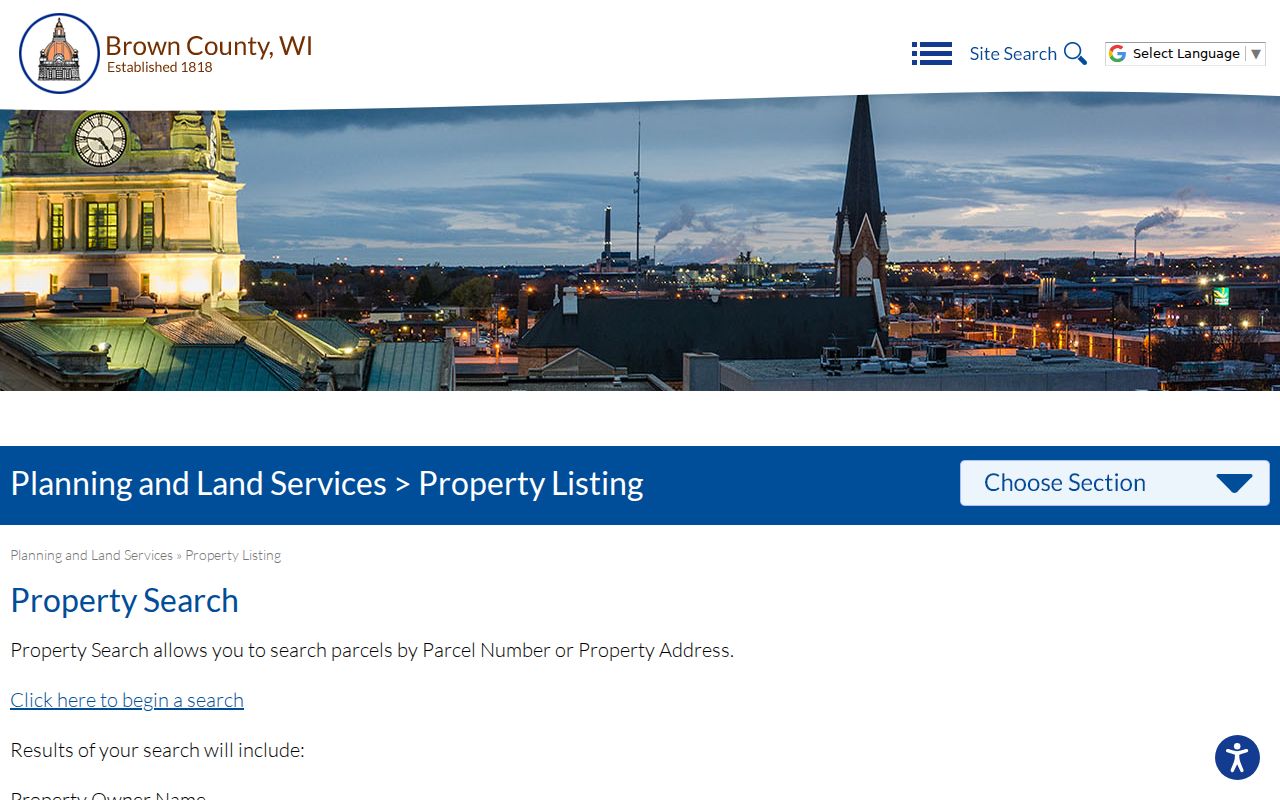
The county's own page describes a roll summary, not a complete appraisal card.
Brown County and DOR Assessment Ratios
The Wisconsin DOR publishes aggregate ratios and equalized values for every municipality. Those reports show how a local roll stacks up against market indicators and statewide requirements. They explain towns, villages, and cities. They do not price one Brown County house. They should never replace a parcel's assessed value. Use the DOR aggregate-ratio reports for municipal context. Then bring the parcel number, assessment year, land and improvement split, and municipality to the local assessor for the parcel-specific conversation.
Brown County Assessment Maintenance and Revaluation
Routine maintenance and full revaluation are different jobs in Wisconsin's assessment framework. An annual change can come from new construction. It can also stem from a parcel split, corrected records, or a local valuation cycle. There is no single county-wide revaluation year. Assessment work belongs to the municipality, so ask its assessor which cycle covers your parcel. Wisconsin's Property Assessment Manual explains the state framework. DOR's 2026 preliminary equalized-value notice set June 8 for municipal filing. It listed July 31 for preliminary postings and August 14 for final values. Those dates form a statewide reporting calendar. They are not Brown County assessment deadlines. Check the live DOR release before citing a final figure.
Brown County Recorded Sale Evidence
A deed can hold a sale or consideration clue, but only context makes it useful. Check the grantor, grantee, legal description, and recording date. That confirms the instrument matches the parcel. The price may not sit in one standard roll field. Remember what a deed is. It records a transaction. It does not say what the property would fetch today. Brown County's online deed index and images reach back to February 1, 1962. Tapestry and Laredo offer online access. A terminal also sits at the Register of Deeds by appointment. Older deeds may live in historic books and indexes, so ask. Open the instrument image before leaning on any transfer as a comparison. Tax-bill amounts, credits, and review steps belong on the Brown County property tax records page.
Brown County Parcel Card Detail Limits
Brown County states plainly that its public system does not show property-card details. Photos, square footage, bedroom and bathroom counts, and age are all absent. A blank field proves nothing about the building. Some details matter for an assessment review. Contact the municipality or its contracted assessor for a property record card. The Land Records Search portal presents its terms before search.
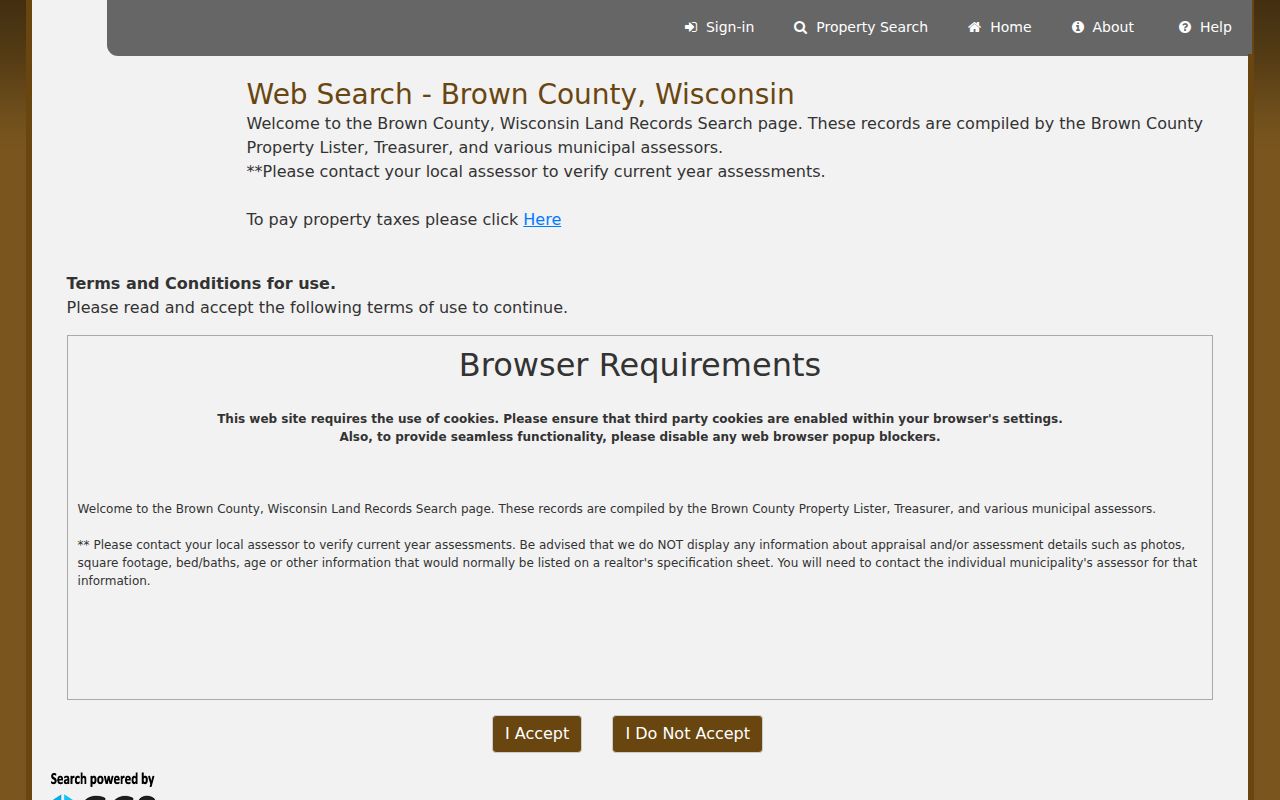
The portal notice asks users to verify assessments locally. It also notes that detailed appraisal fields are not shown.
What a Brown County Assessed Value Is Not
A Brown County assessed value is a tax-roll figure. It is not a promise of a sale price. It is not an individual appraisal, either. It says nothing about condition, room count, or current building features. The local assessor can explain how the parcel's value was set. A qualified appraiser answers a sale or lending valuation question instead.
Value vs price. An assessed value supports taxation; it is not what the property will necessarily sell for. Use a qualified appraisal for a current market opinion.